

















For finance teams · Trained on $6bn+ UA spend · 300+ titles

Cohort-Based Forecasting for Mobile Gaming Finance Teams

Plan UA budgets, model growth scenarios, and forecast revenue with 94%+ accurate D365 LTV predictions. Built for CFOs, FP&A, and finance leads at mobile gaming studios.

Cohort Analytics
LTV & ROAS predictions · Dec 2025 to Mar 2026
Date Range
Last 24 months
Segment
All
Active User Contribution
DAU
Forecast →
2024AprJulOct2025AprJulOct2026Apr
Revenue Contribution
Revenue
Forecast →
2024AprJulOct2025AprJulOct2026Apr
Jan '24
Mar '24
May '24
Jul '24
Sep '24
Oct '24
Nov '24
Trusted by
52 Entertainment logoApps logoBear Hug Entertainment logoConcrete Software logoGear Games logoMattel logoMetamoki logoSecond Dinner logoTapNation logoTreesPlease Games logoTurborilla logoVertigo Games logoWildlife logo

Mobile gaming finance is harder than it looks

Mobile gaming has multi-year payback windows, cohort-driven economics, and ad/IAP/subscription revenue mixes that don't fit standard SaaS or B2B FP&A frameworks. Spreadsheets break under the weight of cohort tables. Generic FP&A tools weren't built for cohort-based UA economics, so finance teams end up re-modelling LTV by hand every quarter.

Kmnd was built for this: a cohort-based forecasting and budgeting platform that thinks the way mobile gaming finance teams actually need to think. LTV is predicted, not assumed. Forecasts re-run continuously. Plans are defensible at the board level because the underlying models have been calibrated against $6bn+ of industry UA spend.

Capabilities

Built for the way mobile gaming finance teams plan

Cohort-based LTV forecasting

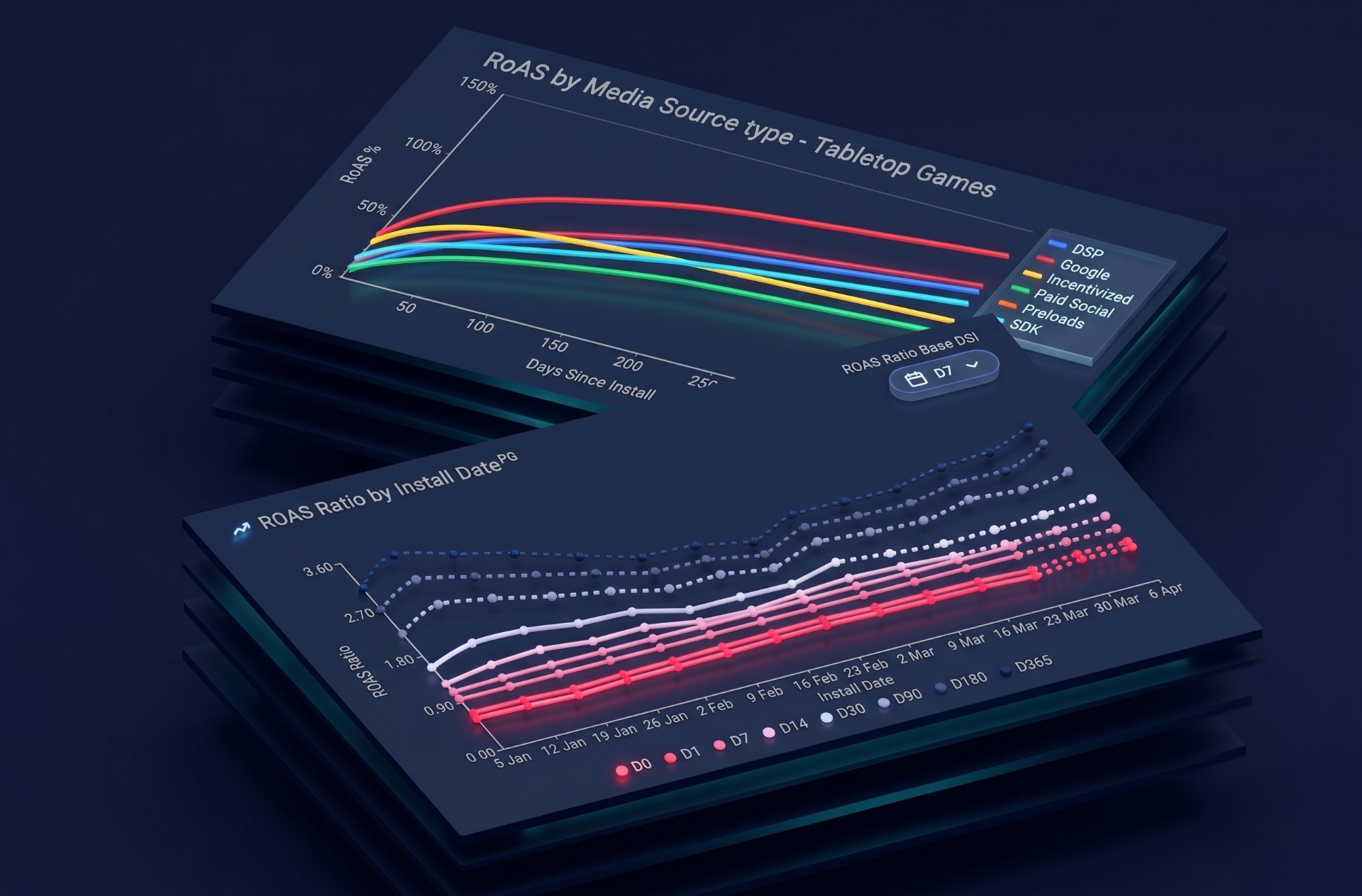
94%+ accurate D365 forecasts. Campaign, geo, and title-level granularity. Confidence intervals on every prediction so finance teams know what to trust.

  • Ad revenue, IAP, and subscription monetization
  • Calibrated against $6bn+ of industry spend
  • Confidence intervals on every forecast

Scenario planning at portfolio scale

Model UA budget scenarios across multiple titles. Compare aggressive vs. conservative growth strategies. Pressure-test plans before committing capital.

  • Multi-title portfolio modeling
  • Geo and market-level scenarios
  • Sensitivity testing on retention and ARPU

Real-time re-forecasting

As new cohort data arrives, Kmnd updates forecasts continuously. Your board deck doesn't go stale a week after you build it.

  • Continuous cohort updates
  • Variance tracking against plan
  • Auto-flagging on material drift

Investment-grade outputs

Designed for board reporting, fundraising, and M&A diligence. The same models underwrite $12bn+ in mobile gaming transactions through Kohort's advisory practice.

Who uses Kmnd

Finance teams, FP&A, and investors

CFOs and finance leads

Build defensible, cohort-driven plans. Re-forecast continuously. Hand the board numbers you can stand behind.

FP&A teams

Replace fragile UA spreadsheets with cohort-based models. Spend less time rebuilding forecasts, more time analysing them.

Investors and acquirers

Underwrite mobile gaming investments with the same forecasting infrastructure used by 300+ studios. See /diligence for advisory engagements.

Kohort works with 300+ studios. See published customer case studies.

How is Kmnd different from generic FP&A tools?

Tools like Anaplan, Cube, and Pigment are general-purpose FP&A platforms. They give you a flexible modelling environment, but you bring your own assumptions about LTV, retention, and payback. For most B2B SaaS that's fine. For mobile gaming, the cohort dynamics are too specific.

Kmnd is purpose-built for mobile gaming. Cohort-based forecasting is the foundation, not a feature you bolt on. The models are trained on $6bn+ of UA spend across 300+ titles. You don't bring your own assumptions about D365 LTV. Kmnd predicts them, with confidence intervals, calibrated against industry data.

Backed by leading investors
AlbionVCEurazeoThe Raine GroupTriple Point
Ready when you are

Build forecasts your board can stand behind

Talk to us about how Kmnd can replace your UA forecasting spreadsheets with cohort-based models trained on $6bn of UA spend.